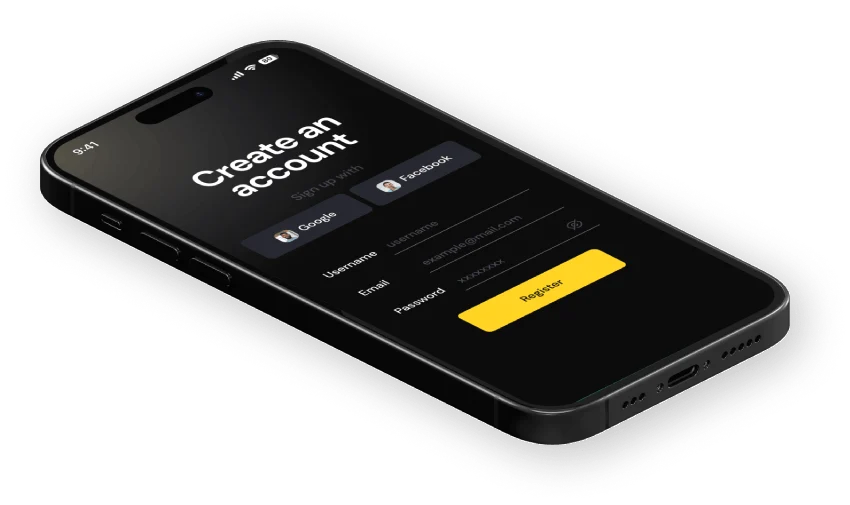
Mobile hiring is the future of UK construction because it solves the sector’s biggest operational problem, filling labour gaps fast, without the delay and cost of traditional agencies. A construction hiring app lets contractors post a job and reach certified local tradesmen within minutes, filter by trade and skills, and confirm in-app. With the UK needing around 206,000 extra workers by 2030, this kind of on-demand, direct construction hiring is quickly becoming how the industry actually staffs its sites.
Construction has digitised almost everything except the moment that matters most: getting the right worker on site. Design runs on BIM, plant is tracked by GPS, invoices move through cloud software, yet when a contractor is a bricklayer short on Monday, the answer is still a scramble of phone calls, agency emails, and hope. That gap between a fully digital project and a stubbornly analogue hiring process is exactly where mobile hiring is taking over.
This article explains why construction hiring is going mobile, what a construction hiring app changes for contractors and tradespeople, and why on-demand, direct hiring is set to become the default way UK sites are staffed.
The problem with traditional construction hiring
The old model was built for a slower market. A contractor rang round known contacts, or briefed an agency and waited for CVs, then paid a margin on every placement. It worked when labour was plentiful and programmes moved gently. It does not work now.
The UK faces a structural labour shortage, with CITB projecting the sector needs roughly 206,000 extra workers by 2030 against an ageing workforce and reduced inflow of EU labour. When skilled workers are scarce, speed decides who gets them. A hiring process that takes days, or an agency layer that adds cost and distance, is a competitive disadvantage. Traditional construction recruitment was never designed for a market where the best tradesmen are booked within hours.
What mobile hiring actually changes
Mobile construction hiring puts the whole process, posting, matching, chatting, and confirming, on a phone, which is where site-based people already live. A mobile construction hiring app collapses a multi-day chain into a few taps, and that compression changes the economics of staffing a project.
Speed: from days to minutes
Post a job and nearby tradesmen are notified instantly. Instead of waiting on callbacks, a contractor sees interested, certified workers within minutes. When labour availability is the leading cause of programme delay, turning a two-day hire into a two-hour one directly protects the schedule.
Locality: hire local tradesmen online
Mobile hiring is inherently local. Contractors filter by working radius to hire local tradesmen online, and workers only see jobs within their chosen area. That cuts travel time and cost, reduces no-shows, and, by keeping work close to home, lowers the carbon footprint of staffing a site, a quiet but real advantage as the sector faces sustainability pressure.
Cost: cutting out the middleman
Hiring subcontractors online through an app removes the agency margin from the equation. The contractor deals directly with the tradesperson, from posting to messaging to confirmation. Lower recruitment costs mean more of the budget stays in the project, and for tradespeople, no agency cut means the rate they agree is the rate they keep.
Control: everything in one place
A construction workforce app keeps job details, applications, and in-app chat in a single thread. Contractors compare skills and ratings before hiring; tradespeople manage their availability and opportunities from the same screen. This is recruitment technology built for how construction really works, on the move, not at a desk.
Why on-demand tradesmen are the model of the future
Construction demand is lumpy by nature. A programme needs ten workers this fortnight and two the next, and no directly employed team maps neatly onto that. On-demand tradesmen, accessible through a construction recruitment app the moment they are needed, let contractors scale a mobile workforce up and down without carrying idle labour or committing to agency retainers.
This is the same digital transformation that reshaped how people book transport, accommodation, and freelance work, arriving in construction. The pattern is consistent: platforms that connect supply and demand directly, in real time, on mobile, tend to win because they are faster, cheaper, and simpler for both sides. Construction hiring is following that path, and the contractors and tradespeople adopting smart hiring early are the ones building the relationships and ratings that compound over time.
The direction of travel
A tightening labour market rewards speed. Speed favours direct, mobile, on-demand hiring over slow, agency-led recruitment. As more of the UK workforce joins these platforms, the network effect makes them faster and deeper still. That is why mobile hiring is not a passing trend, it is where construction hiring is heading.
How Subbie puts mobile hiring in your pocket
Subbie is a construction hiring app built for exactly this shift. Contractors register a verified company, post a job, and reach certified local tradesmen near them in minutes, filtering by trade, profession, and skills. Tradespeople set their trade and working radius and get instant notifications when matching work appears, then apply and chat in a single tap. It is the best of mobile construction hiring in the UK: fast, direct, budget-friendly, and free to download, from London to Leeds, Manchester to Glasgow.
Key takeaways
- Traditional agency-led construction hiring is too slow and too costly for a tight, fast-moving UK labour market.
- Mobile hiring compresses days of recruitment into minutes, keeps work local, and cuts out agency margins.
- On-demand tradesmen let contractors scale a mobile workforce up and down without carrying idle labour.
- A construction hiring app like Subbie makes direct, digital construction hiring the practical default for UK sites.
Frequently asked questions
What is a construction hiring app?
A construction hiring app is a mobile platform that lets contractors post jobs and connect directly with local tradesmen and subcontractors, and lets workers find and apply for nearby jobs. It replaces agency phone-arounds with instant, in-app matching, chat, and confirmation.
Why is mobile hiring the future of UK construction?
Because the UK faces a structural labour shortage, needing around 206,000 extra workers by 2030, and speed now decides who secures scarce skilled labour. Mobile hiring fills gaps in minutes rather than days and removes agency cost, making it faster and cheaper than traditional construction recruitment.
How do contractors hire workers today?
Increasingly through construction hiring apps rather than agencies. Contractors post a job, reach certified local tradesmen instantly, filter by trade and skills, review ratings, and confirm the hire in-app, cutting the recruitment layer out entirely.
Is it cheaper to hire subcontractors online than through an agency?
Usually, yes. Hiring subcontractors online through an app removes the agency margin, so contractors keep more of their budget and tradespeople keep more of their rate. The connection is direct, from posting to payment discussion.
What is the best construction hiring app in the UK?
Subbie is a leading UK construction hiring app: contractors reach certified local tradesmen in minutes, workers get instant job alerts within their chosen radius, and it is free to download and use across the UK, with no agency fees.
Get Started with Subbie
Hire smarter, not slower. Download Subbie to post jobs and reach certified local tradesmen in minutes, or to find construction jobs near you. Free across the UK, no agencies, no middlemen.